Impacts of AirBnB regulation in New York
New York has long been a money spinner for AirBnB. In January 2023 there were 38,500 listings. As…



New York has long been a money spinner for AirBnB. In January 2023 there were 38,500 listings. As…
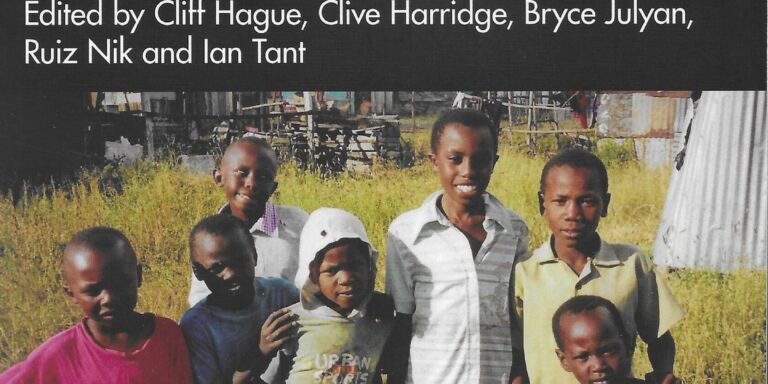
In 2010 the Commonwealth Association of Planners held its first Student Essay competition. The winners were Jeremiah Atho…
Ken Loach’s film, Kes, was released in 1969. What does it tell us about life in a coalfield…



Cliff is a freelance consultant, researcher, author and trainer. He was the Chair of the Cockburn Association 2016 – 2023.
He is Professor Emeritus of Planning and Spatial Development at Heriot-Watt University in Edinburgh.
He is a Past President of the Royal Town Planning Institute, and of the Commonwealth Association of Planners.
He is a past Chair of Built Environment Forum Scotland.
He was awarded the O.B.E. in the 2016 Birthday Honours.
Link to buy
Link to buy
This blog was first posted on the Planning Resource website on 28 November 2011. Nowa Huta was a showcase development by the communist government in Poland in the 1950s. Today, on a bright, cold central European winter afternoon, I took the bus from the old town of Krakow, and rode out to see the place…

This blog was first posted in January 2018. At an Innovation Circle Network conference in December 2017 I spoke about China’s One Belt One Road vision. This blog sketches and comments on this ambitious transnational project. In January 2017 the East Wind arrived in London. The freight train’s journey had taken 16 days and covered 12,000kms from…
This is my third blog from the 10th World Urban Forum in Abu Dhabi in February 2020. Today has not been a disaster! Far from it, there have been some really good stories to hear at the World Urban Forum. But I want to put the theme of disasters at the heart of this blog.…
This first appeared in Planning on 16 January 2004 and is reproduced by kind permission of Planning Resource.
The third report on The State of African Cities , published in 2014, shows how informal development is a key force in the continent’s urbanisation, yet also poses major dilemmas. The report’s sub-title “Re-imagining sustainable urban transitions” suggests both the need to come up with new answers, but also the elusiveness of solutions. Anybody interested in Africa,…
In smaller towns across the UK and many other countries, the town centres are struggling. Julian Dobson, has a barrowful of ideas of what to do about it. His book How to Save Our Town Centres is the best starting point I know for those who want to combine analysis with action. It is well researched, well-informed and…
Ths blog was first posted in May 2018. As European countries become more inward-looking, Professor Klaus Kunzmann sees a possible opportunity for planners to rebuild the reputation of their profession. While spatial planning in Germany is gradually losing its former significance and influence, a new approach to planning is rising in the country: Heimatplanung (homeland planning). Following…
This blog was posted ahead of the tenth World Urban Forum, in Abu Dhabi 8-13 February 2020. Despite many endorsements ofthe idea for Global Planning Aid at the WUF, it proved not possible to raise the pump-priming funding required to set up a pilot project in Banjul, The Gambia. The CHOGM planned for 2020 was…
Posted May 26, 2014 by cliffhague “Architecture is for people”. This is how the new Danish Architecture Policy begins. The Danish government sees architecture as defining the country at home and internationally. It is about competitiveness, moving towards sustainability and social cohesion. The new policy depicts architecture as contributing to “the development of the welfare state”, and says that local…